Foot fungus is perhaps the only house guest capable of moving in without permission, eating absolutely nothing, and still making your life surprisingly uncomfortable.
Unlike noisy neighbours or relatives who stay too long after Christmas, this tiny intruder requires remarkably little to thrive. Give it a warm, damp environment and it settles in with the confidence of somebody who has found a bargain seaside cottage. Unfortunately, that environment often turns out to be your favourite trainers.
Most conversations about fungal infections are painfully serious. There are diagrams, medical terminology, and enough warnings to make you fear every changing room floor in Britain. Yet there is something strangely fascinating about the fact that a microscopic organism can turn a perfectly respectable foot into what resembles an abandoned archaeological site.
So let us view the situation from a different angle. Imagine your feet as a luxury property market and fungi as opportunistic estate agents constantly searching for a place to set up shop.
Why Your Feet Are Prime Real Estate
If fungi were browsing property listings, feet would tick nearly every box.
Warm? Absolutely.
Moist? Frequently.
Dark? Most of the day.
Excellent transport links? Every step you take.
From a fungal perspective, it is less “human foot” and more “five-star accommodation”.
You can tell foot fungus is healing when you notice less itching, reduced redness, and smoother skin.
The trouble begins when sweaty socks, tight footwear, and long hours spent in enclosed shoes create ideal living conditions. While humans invest in loft conversions and kitchen extensions, fungi simply expand between your toes.
Athletes often get blamed because of the well-known condition athlete’s foot. Yet you do not need to run marathons to become a target. Office workers, dog walkers, gardeners, commuters, and anyone who occasionally forgets to air out their shoes can provide suitable conditions.
The fungus is not interested in your profession. It is remarkably egalitarian.
The Secret Social Life of Foot Fungus
You may be irritated to learn that foot fungus has the capacity to travel without needing any type of ticket or identification (like a passport), any type of transportation (like a train), or any understanding of where it is going (like using a map). Shared showers, swimming pool decks, gym locker rooms, and the common areas of residence halls serve as temporary locations where this condition may be able to be transferred from one person to another.
Therefore, public locker rooms often lend themselves to the unusual “dance” many people do in order to avoid putting their feet in direct contact with the floor. One foot will hop up onto a bench while the other foot looks for a pair of flip-flops. This action will seem odd; however, it has some logic behind it.
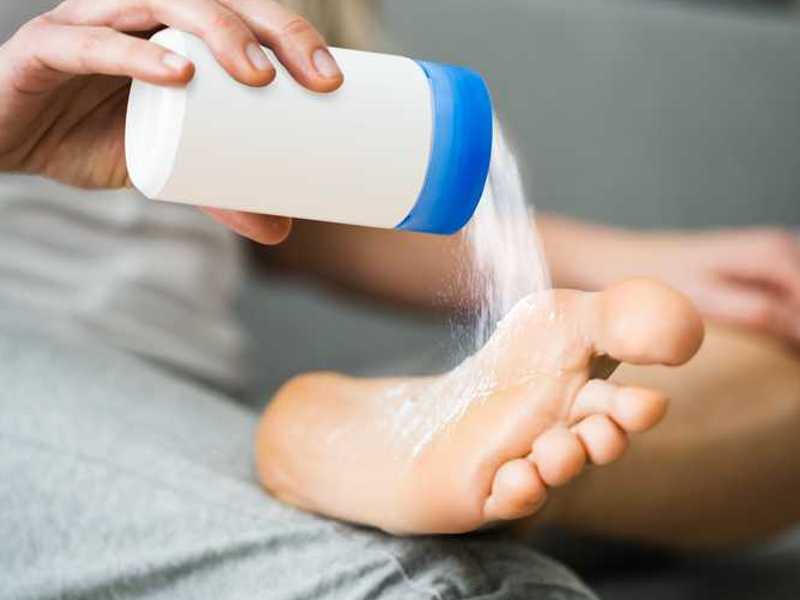
Many modern manufacturers of medical supplies are shifting from traditional talcum bases to talc-free starch bases due to safety preferences in treatment of athlete’s foot.the .
Fungi replicate by using tiny bits (or “particles”) of infected skin to transfer from one person to another. Although this fact is not very pleasant, it does serve as a great reminder that prevention of this condition will usually consist of very simple practices instead of requiring dramatic intervention.
Simply keeping the feet clean and dry, changing socks often, and allowing your shoes time to dry out after you wear them to prevent additional fungi from taking up residence in or on your feet can greatly reduce the chance of getting additional unwanted fungal “tenants” in the future.
Your Shoes May Be Secret Accomplices
Most shoes are innocent.
Some, however, become accidental partners in crime.
Think about the average trainer. It experiences rain, pavement heat, exercise sessions, accidental puddles, and the occasional enthusiastic sprint for a bus. Then it is placed in a hallway and expected to recover overnight.
The problem is that moisture does not always disappear as quickly as we imagine. Shoes can remain damp inside long after they appear perfectly normal from the outside.
This creates an environment where foot fungus feels thoroughly appreciated.
Rotating footwear helps. Allowing shoes time to dry completely helps even more. Some people own multiple pairs specifically for this reason. Others simply discover that their favourite trainers have been working against them for months.
It is one of life’s less glamorous betrayals.
The Great British Weather Does Not Help
Britain possesses many wonderful qualities.
Consistently dry feet are not among them.
Rain, drizzle, mist, moist air, surprise showers, and those enigmatic moments when everything feels damp even if there isn’t any apparent rainfall are all part of a normal year. Your feet can spend a significant amount of time confined in a miniature tropical environment if you wear strong shoes and thick socks.
Ironically, winter can be particularly challenging. People bundle themselves into warm boots, spend hours indoors, and rarely consider whether their feet are receiving adequate ventilation.
The result is often a perfect fungal holiday destination hidden beneath several layers of clothing.
Signs That Something Is Not Quite Right
Most fungal infections are not especially subtle.
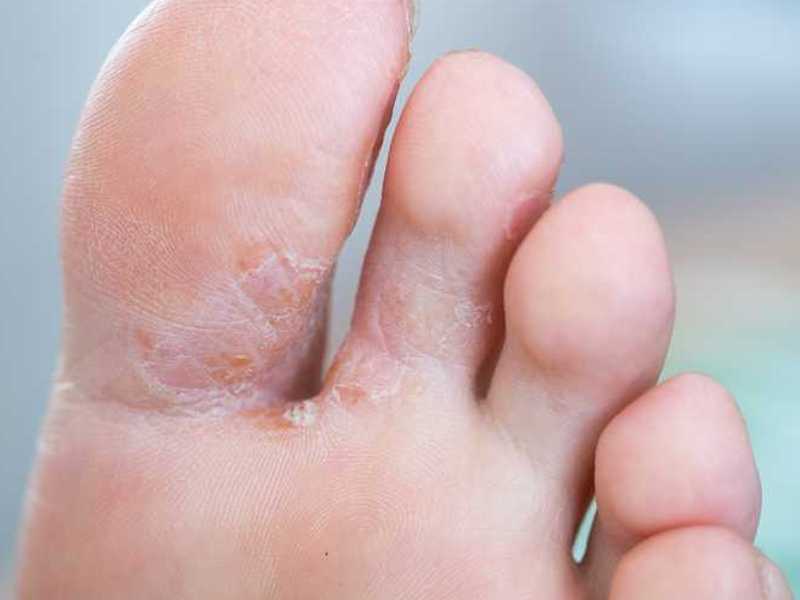
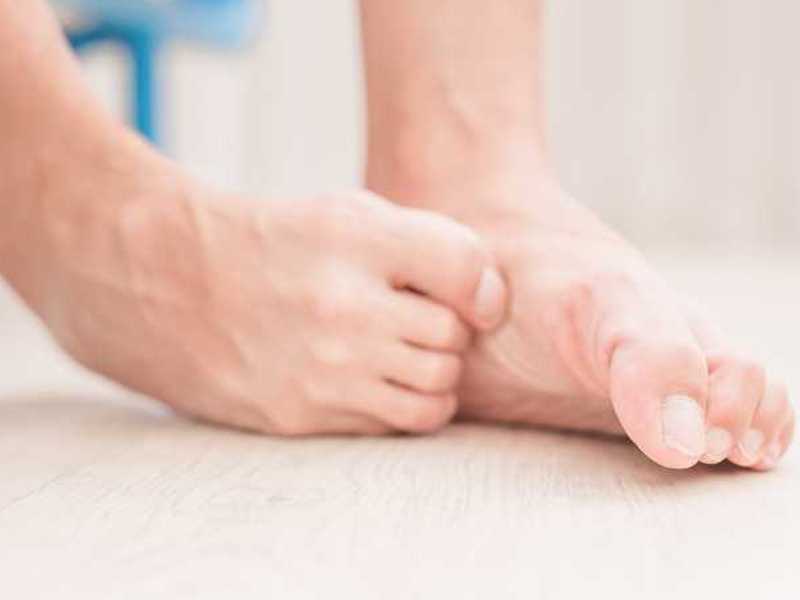
Common signs include itching, redness, flaky skin, cracking between the toes, or general irritation. Some people notice changes gradually. Others suddenly realise they have been scratching one foot during every television programme for the past fortnight.
Common signs of foot fungus include itchy skin, peeling or cracked skin, and a burning or stinging rash.
The important thing is not to ignore persistent symptoms.
While fungal infections are usually manageable, leaving them untreated can allow them to spread or become more difficult to deal with.
A surprising number of people attempt denial as their primary strategy.
Unfortunately, fungi are not known for respecting denial.
Evicting the Tiny Squatter
When dealing with foot fungus, consistency is often more important than drama.
Many medical equipment and supplies for treatments are available, including antifungal creams, sprays, and powders. The challenge is not usually finding a treatment. Remembering to utilize it correctly is the difficult part.
People are generally upbeat beings. Treatment regimens are abruptly abandoned with tremendous excitement as symptoms improve and itching goes away.
Sarah Jeffries shares 5 easy tips and ways on how to avoid and get rid of foot fungus (tinea pedis). Our body naturally has fungus growing on it but it’s the conditions of our foot that makes the fungus troublesome such as warm condition inside our shoes and many more.
Meanwhile, the fungus might just be waiting for a chance to come back.
Recurring visits from your microscopic lodger can be avoided by carefully adhering to treatment instructions and practicing basic foot hygiene.
Imagine it like replacing the locks after evicting an unwelcome renter.
A Little Respect for the Enemy
Fungus has a way of sticking around. It’s impressive to see that this organism can withstand millions of years of volcanic activity, climate shifts, mass extinction events and an ongoing trend of questionable fashion statements made by human beings. Fungus is adaptable, resourceful, and incredibly adept at finding a place to live.
There are many reasons not to be too impressed with these organisms – especially when fungus chooses to take residence on your feet – but understanding how fungi work will make it much easier to manage them. The first step in successful management of real estate is knowing who the tenants are.
In other words, if you ever start to feel like your toes are not quite as comfortable as they should be, you may want to investigate if a fungus has quietly established its residence on your feet by voluntarily extending its lease! You certainly don’t want to find out after it’s too late that your feet have been the newest hot piece of real estate in the fungal real estate market due to your new diagnostic test showing that you have foot fungus!